

For years, many small businesses enjoyed a degree of cybersecurity protection that they didn’t even know they had. Not because their systems were particularly secure. Not because they had invested heavily in cybersecurity. Often, it was because nobody was looking.
Cybercriminals, like everyone else, were constrained by time. Finding weaknesses in computer systems required knowledge, patience and effort. An attacker could only investigate so many companies in a day, and small businesses frequently escaped attention simply because they were not worth the trouble.
Artificial Intelligence has changed that equation entirely.
Imagine discovering that a window in your office has been left slightly open for the last five years. No one noticed. No one climbed through it. It seemed harmless. Then overnight, millions of people suddenly begin checking doors and windows across the country, twenty-four hours a day, every day of the year.
The window wasn’t made any less secure. The difference is that somebody is now actively looking for it. That is where we find ourselves today.
Around the world, organisations are reporting increasing numbers of cyber incidents, ransomware attacks, account compromises and data breaches. Recent events affecting banks, software providers, government agencies and critical infrastructure all point towards the same uncomfortable reality. Attackers now have access to tools that allow them to work on a scale that would have been impossible only a few years ago.
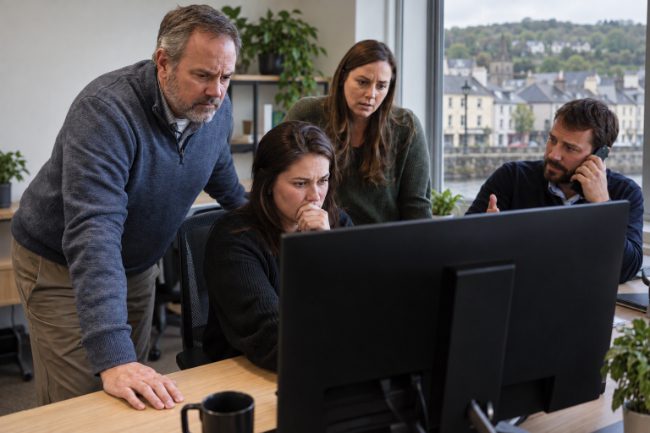
What once required a team can increasingly be done by an individual armed with AI. This should matter to every business owner because, for the first time, size offers very little protection. Many small companies still assume they are too small to attract the attention of cybercriminals. The truth is that modern attacks are rarely personal. Nobody is sitting in a dark room deciding to target a plumbing contractor in Donegal, a solicitor in Louth or an engineering company in Cork.
The attacks are automated.
Software searches the internet continuously for weaknesses. It looks for outdated systems, poorly protected email accounts, exposed remote access services and known software vulnerabilities. If it finds an opportunity, it exploits it. The attacker’s decision-making process is increasingly replaced by technology.
In many ways, we are witnessing the industrialisation of cybercrime. Perhaps the most concerning part is that many businesses assume they would know if they had been breached. Unfortunately, that is often not the case.
Business owners tend to imagine a cyber-attack as a dramatic event. Computers lock up. Screens turn red. A ransom demand appears. Phones start ringing.
Sometimes that happens.
More often, an attacker gains access quietly and remains unnoticed for weeks or months. Information is copied, emails are monitored, and opportunities are identified. The eventual ransomware attack or fraud attempt may be merely the final chapter of a story that began long before anyone realised there was a problem.
When I speak with business owners, one question often reveals more than any technical assessment:
“How would you know if someone gained access to your systems today?”
Many are surprised to discover they don’t have a clear answer.
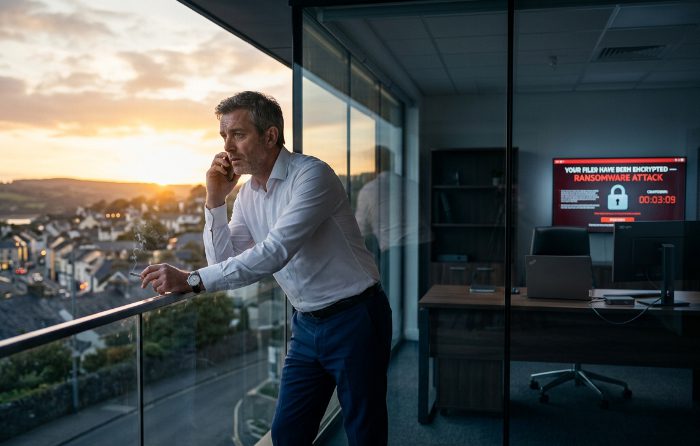
This is where the conversation around cybersecurity needs to change. Too often, organisations view cybersecurity as a technology problem. They assume that because they have antivirus software, a firewall or Microsoft 365, they are adequately protected.
Security is not a product! – It is a process.
Having cybersecurity protection that is never monitored is like fitting a burglar alarm and disconnecting the siren. It may technically exist, but it is unlikely to help when you need it most.
The good news is that most small businesses are not facing an impossible challenge. The majority of successful attacks exploit basic weaknesses rather than highly sophisticated vulnerabilities. Weak passwords, missing security controls, inadequate monitoring, poor backup practices and unpatched systems remain responsible for a remarkable number of incidents.
The businesses that will navigate the next few years most successfully will not necessarily be those spending the most money on technology. They will be the organisations that understand their risks, ask the right questions and take sensible steps before something goes wrong.
Artificial Intelligence is undoubtedly one of the most transformative technologies of our generation. It is helping businesses become more productive, more efficient and more competitive.
It is also helping cybercriminals do exactly the same thing. That is the reality many organisations have yet to grasp. The question is no longer whether attackers are using AI. They are.
The real question is whether your business is prepared for a world where cybercriminals never sleep, never stop searching and can examine thousands of potential targets before you’ve finished your first cup of coffee. The main question is whether you are properly protected or wide open to attack. Because in this new era of AI-driven cybercrime, hoping nobody notices the open window is no longer a cybersecurity strategy. It is a security risk.
Because the best time to deal with a cyber-attack is before it happens.
About the Author:
is Director of Techie2U, a cybersecurity and managed IT services provider helping Irish businesses improve resilience, security and operational reliability. At Techie2U, we help small businesses understand their risks, strengthen their cybersecurity, and put practical protections in place before a cyber incident becomes a business crisis.